The Rise of Sovereign AI in the Gulf

Summary
The UAE and Saudi Arabia are moving beyond AI adoption and building the regulatory foundations for AI. As AI becomes embedded across government, finance, and infrastructure, the key challenge is no longer access to powerful models, but turning those capabilities into secure, governed, and production-ready systems. This creates a major opportunity for technology companies and for Walturn to help transform AI ambition into trusted digital products
Key insights:
AI is becoming national infrastructure.
Governance is as important as capability.
Product execution is the real bottleneck.
The Gulf is becoming a build market.
Walturn can serve as the execution layer.
Introduction
The Gulf is no longer treating artificial intelligence as a tool to test team by team or department by department. The UAE and Saudi Arabia are increasingly treating it as infrastructure that must be governed, integrated, and operationalized across government, finance, and digital services. That shift matters because it changes the real bottleneck. The problem is no longer just model access. It is product execution under institutional constraints. For technology companies in the region, the opportunity is significant. The winners will not be those who consume AI. They will be the ones to turn AI capabilities into governed systems, trusted workflows, and production-ready products. That is also where Walturn can position itself most strongly. It can help regional firms move from AI ambition to real execution.
The Gulf Has Moved Beyond AI Adoption
1. The Gulf Is Not Following the Usual AI Sequence
A great deal of AI commentary still assumes that countries move through a familiar sequence. First, they experiment; then they adopt at the enterprise level; then they build governance; and only later do they scale. The Gulf is not following that script. The UAE and Saudi Arabia are moving in a more deliberate, structural way. They are not only encouraging the use of AI. They are building the legal, institutional, and technical conditions for AI to operate in government, finance, and digital services. That is a deeper move than adoption. It is infrastructure formation.
2. Why Infrastructure Changes the Product Engineering Problem
That difference matters because infrastructure changes what companies actually need to build. When AI is treated as a feature, firms can improvise. When AI is treated as a national capability, improvisation becomes expensive. Product teams must consider data control, model boundaries, operator intervention, auditability, and failure recovery from the outset. The market starts rewarding the engineering discipline rather than presentation quality. That shift raises the importance of product architecture far more than generic AI enthusiasm usually admits. (UAE Legislation)
3. From Buyer Market to Build Market
The Gulf is increasingly becoming a build market rather than a buyer market. That does not mean external tools and platforms stop mattering. It means value is shifting toward firms that can operationalize AI within governed systems rather than merely purchasing access to models or cloud services. The region is becoming more important for builders who can encode trust, control, and institutional logic into software. That is a much more serious opportunity than simple technology procurement.
The UAE Is Building AI into the State and the Financial Stack
1. The Shift Toward an AI Native Government
The UAE is making one of the clearest sovereign AI moves in the region. Abu Dhabi’s Government Digital Strategy aims to make the emirate the world’s first fully AI native government across all digital services by 2027, supported by major investment and a large pipeline of AI use cases already in active development and deployment. That matters because it shows that AI is being treated as a governing capability, not merely an administrative enhancement. The state is no longer discussing whether to use AI. It is deciding how deeply to organize public systems around it.
2. AI Inside the Machinery of Regulation
The UAE is also doing something more structurally important than many markets. It is embedding AI into the legislative and regulatory process itself. The General Secretariat of the Cabinet introduced a regulatory intelligence ecosystem to leverage AI across the life cycle of regulation. That move changes the meaning of governance. Regulation is no longer just a framework that constrains AI from the outside. It becomes a domain where AI itself is used to improve the speed, responsiveness, and quality of institutional reasoning. That is one of the strongest signals that the country sees AI as part of state capacity. (UAE Legislation)
3. Financial Infrastructure as a Sovereign AI Layer
The financial system makes the UAE case even stronger. The Central Bank of the UAE has already tied open finance, instant payments, and infrastructure modernization to a broader transformation program. Its 2024 annual reporting highlights comprehensive open finance regulation and technical standards. It also points to the continuing development of Aani and related payment infrastructure. On top of that, the Central Bank and Presight announced a joint venture to support AI-powered financial market infrastructure, including CBDC-related systems, Aani, Jaywan, RTGS, and Open Finance Nebras. That is sovereign AI in operational form, not merely in policy language. (Central Bank of the UAE)
4. Why the UAE Approach Matters to Product Builders
For product builders, the UAE matters because it is shaping the control plane as much as the service layer. Consent, identity, payment orchestration, operator visibility, API trust, and resilience are being pushed closer to the heart of the product. That creates an environment where firms with strong product engineering discipline can build with the market rather than retrofit later under pressure. It rewards companies that can design governed systems early, before those expectations harden into unforgiving constraints.
Saudi Arabia Is Institutionalizing Governed AI
1. From AI Ambition to Institutional Method
Saudi Arabia is equally important, though its posture is more explicitly institutional. The country is not relying solely on AI ambition. Through SDAIA and the Digital Government Authority, it has developed guidelines, studies, frameworks, and public materials that move AI from broad aspiration toward structured implementation. The signal here is discipline. Saudi Arabia is trying to ensure that AI adoption falls within a governed national program rather than scattered experimentation. (SDAIA)
2. Government Adoption as a Structured Program
The Saudi public sector materials are especially revealing. Official guidance and studies cover generative AI in digital government, AI agents in government workflows, retrieval augmented generation for enterprise innovation, and broader adoption readiness. Taken together, they show a government working through the operational consequences of AI rather than treating it as a symbolic modernization theme. This is important because it suggests that institutional capacity, not just technical novelty, is becoming the real measure of seriousness.
3. Open Banking and Regulated Digital Finance as AI Foundations
Saudi Arabia’s financial direction reinforces the same logic. SAMA has now moved open banking from sandbox activity into formal licensing. That change matters because AI only becomes strategically useful in finance when it runs on trusted, supervised rails. Open banking, controlled data access, and licensed participation create the institutional substrate that enables AI to operate in serious products rather than isolated demos. In that sense, regulated finance becomes one of the clearest places where sovereign AI stops being rhetoric and becomes system design. (Sama)
4. Why Saudi Arabia Signals Serious Execution Discipline
The deeper Saudi signal is not simply that AI is being encouraged. It is that implementation is being channeled through formal guidance, oversight, and institutionally legible pathways. That matters to technology companies because it raises the premium on execution quality. Markets built on formal progression tend to reward firms that can ship reliable products under clear operating constraints. They tend to punish improvisation that looks impressive early but breaks under governance and scale. (SDAIA)
The Real Challenge Is Not Model Choice. It Is Product Execution.
1. Why the Model Debate Is Too Narrow
Much of the global AI debate is still too model-centric. It overfocuses on who has access to which model, which benchmark is stronger, or which provider leads in a given month. In the Gulf, that framing is too shallow. The harder problem is not picking a model. It is building the operational system around the model so that it can work inside multilingual, multi-stakeholder, and regulated environments without becoming opaque or brittle.
2. The System Around the Model Is the Real Product
Real value is created in the surrounding architecture. Identity, workflow design, policy enforcement, operator interfaces, mobile and web delivery, logging, escalation, and recovery controls determine whether an AI capability can actually be trusted in production. A region may secure compute, attract global partnerships, and announce large AI programs, but it will still underperform if institutions and companies cannot translate those capabilities into dependable products. The system around the model is the real product.
3. Control, Observability, and Recovery as Core Design Requirements
This is why control matters as much as intelligence. In regulated environments, a useful AI system must be bounded by policy, visible in operation, and recoverable when conditions change. Without those qualities, a system can appear advanced while remaining institutionally weak. The future advantage will belong to teams that can build AI systems not only capable but also governable under stress. (UAE Legislation)
4. Why Engineering Maturity Will Define the Winners
The winners in the Gulf will not be those with the most dramatic AI messaging. They will be the ones with the engineering maturity to operationalize AI under real constraints. That means treating design, workflow logic, platform architecture, and institutional reliability as core parts of AI execution. Model capability may open the door, but engineering maturity is what keeps firms in the room.
Why This Is a Serious Opportunity for the Gulf
1. A Region Still Early Enough to Shape Product Patterns
The Gulf has a rare advantage right now. In several important domains, it is still early enough to shape product patterns before they harden into legacy constraints. That is especially true across government services, regulated finance, and trusted digital infrastructure. Because the rail-building phase is still active, strong companies still have room to influence architecture rather than inherit it. That creates a level of strategic leverage that mature ecosystems often no longer offer.
2. Architectural Influence, Not Just Market Entry
This is why the opportunity is bigger than market entry. It is an architectural influence. The companies that move early with discipline can help define how AI is actually operationalized in the region. That is a much stronger position than simply landing customers in a fast-growing market. It means shaping the product logic and governance patterns that others may later be forced to follow.
3. Why Generic AI Playbooks Will Fail
Generic AI playbooks will not be enough. Borrowed architectures from Europe or the United States can miss the Gulf’s own regulatory sequencing, trust requirements, identity flows, and institutional structures. A region building sovereign AI capacity will not be satisfied with AI products that are merely translated or lightly repackaged. It will reward systems designed for local operating realities from the beginning.
4. The Strategic Window Now Open in the Gulf
That is why this moment matters so much. The Gulf is not simply adopting AI. It is shaping the conditions under which governed AI products can be built. For serious builders, that is a strategic window. For weaker firms, it is a warning that the era of casual AI integration is closing quickly.
Where Walturn Fits
1. Why Sovereign AI Needs More Than Strategy
Strategy decks, vendor selection, or policy language alone do not solve the problem of sovereign AI. It requires research, design, engineering, deployment, and refinement to work together as one discipline. That is precisely why product engineering becomes so important in this environment. The challenge is not only to imagine what AI could do. It is to build systems that can actually carry that capability into production without losing trust, coherence, or control. (Walturn)
2. Walturn as a Product Engineering Partner
Walturn’s public positioning aligns well with that challenge. The company describes itself as a product engineering partner that researches, designs, builds, deploys, and refines products while leveraging data and AI. Its AI engineering materials state that it has been integrating AI into product engineering since 2017. That matters because the Gulf’s AI opportunity is increasingly about execution under real constraints rather than about theory alone.
3. Translating AI Ambition into Governed Systems
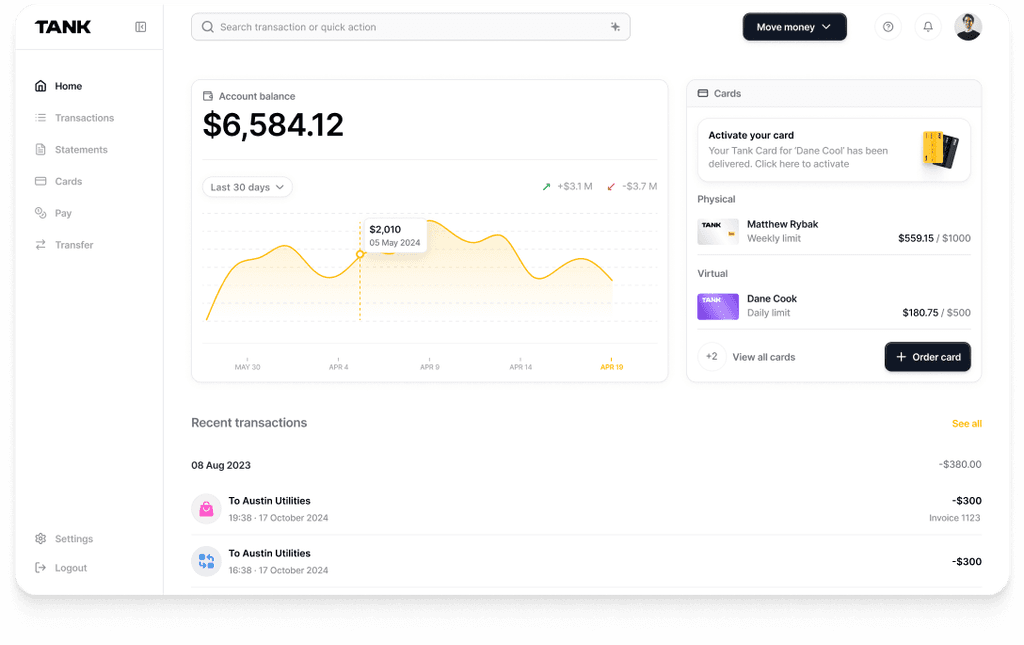
Walturn also has concrete signals that make this positioning credible. Its Hub71 case study ties it directly to Abu Dhabi’s technology ecosystem, which matters in a region where ecosystem trust and institutional alignment carry real weight. Its Tank Payments case study highlights measurable engineering outcomes in the payment context, including faster development and improved delivery flow. Those signals matter because the market now needs builders who can translate AI ambition into governed workflows, payment logic, operator tooling, and production-ready systems.
4. Why Walturn Is Well Positioned in the Gulf
Walturn should not frame its value as simply building AI products. That is too vague and too small. The stronger story is that Walturn can help Gulf technology companies turn sovereign AI ambition into governed product systems. That means designing with trust, control, execution, and regional context in mind. In a market that increasingly values governed intelligence over raw experimentation, that is a serious proposition.
The Hard Truth
1. Model Access Alone Will Not Choose the Next Winners
The next AI winners in the Gulf will not be decided by model access alone. They will not be chosen only by compute budgets, announcements, or headline partnerships. They will be chosen based on whether countries and companies can convert AI capability into systems that people can trust and institutions can govern. That is much harder work than model adoption, but it is the work that lasts.
2. Control Is Now Part of Capability
That is the deeper meaning of sovereign AI in the Gulf. It is not technological symbolism for its own sake. It is the recognition that in government, finance, and national digital infrastructure, control is part of capability. A system that cannot be governed will eventually struggle to scale. A system that cannot recover under stress will eventually lose trust. The real strength lies in combining intelligence with institutional reliability.
3. Why Execution Will Decide the Sovereign AI Race
This is why execution will decide the sovereign AI race. The companies that matter will be those that can transform AI from a set of model outputs into a set of dependable operating systems for real work. They will design with visibility, policy, recovery, and human intervention in mind from the start. Everyone else will remain stuck in the feature race long after the market has moved on.
4. What This Means for Walturn and the Region
For the Gulf, this creates a major opening for serious builders. For Walturn, it creates a chance to position itself not as another AI services provider, but as an execution partner for governed digital systems. The market does not need more vague AI optimism. It needs teams that can build intelligence into products that are trusted, legible, and operationally strong. That is the real opportunity.
Ending Notes
1. Sovereign AI as the Next Infrastructure Shift
The Gulf has moved beyond the stage where AI could be treated as a collection of experiments layered onto inherited systems. In the UAE and Saudi Arabia, AI is increasingly being embedded into government capability, regulatory design, digital finance, and public infrastructure itself. This is not simply a matter of faster adoption or broader deployment. It is a deeper infrastructural shift that is redefining how digital systems are built, governed, and trusted. As a result, the standard by which technology companies will be judged is changing from whether they can access AI to whether they can operationalize it in ways that are resilient, controllable, and institutionally credible.
2. Why the Gulf Matters Now
This is precisely why the Gulf matters so much at this moment. The region remains early enough in its digital and AI transformation to influence how product patterns, control systems, and trust frameworks are established, yet advanced enough to demand real engineering discipline from the companies building within it. That combination is rare and strategically important. It creates an environment where firms can do more than enter a fast-growing market. They can help define the architecture of the next generation of digital systems. For companies that can design with trust, policy, resilience, and execution built into the product from the beginning, the Gulf offers not just a commercial opportunity but an architectural influence. The firms that recognize this early will build systems that fit the region as it matures, while those that delay will face a far more expensive and constrained path once standards, rails, and expectations harden.
3. The Real Opportunity for Builders and for Walturn
The real opportunity is not to sell more AI into the Gulf or to treat the region as another market for imported intelligence. It is to build the governed systems through which AI becomes durable, trusted, and institutionally useful at scale. That is the category that will matter most in the years ahead, because the next phase of value will not come from model access alone. It will come from the ability to embed intelligence into products, workflows, and infrastructure in ways that are controllable, resilient, and worthy of public and commercial trust. This is where Walturn can be strongest, not as a company that merely speaks the language of AI, but as a product engineering partner that can turn ambition into operating systems, strategy into execution, and complex regional priorities into working digital products. The Gulf is entering a period in which intelligence will be measured not by what can be demonstrated in a prototype, but by what can be trusted in production. The firms that understand this will help define the region’s next digital chapter. The ones that do not will be left building features for a future that has already moved on.
Conclusion
The Gulf is entering a new phase of AI development where success will depend less on model access and more on the ability to build trusted, governed, and production-ready systems. With the UAE and Saudi Arabia shaping AI across government, finance, and digital infrastructure, the region presents a rare opportunity for companies that can combine intelligence with strong engineering and institutional control. Walturn is well positioned to help turn that opportunity into real products.
Authors

The Rise of Sovereign AI in the Gulf
Discover how the UAE and Saudi Arabia are turning AI into national infrastructure, and why product engineering will define the next wave of regional innovation.
References
Department of Government Enablement Abu Dhabi. Abu Dhabi to be the world’s first fully AI native government across all digital services by 2027. (الصفحة الرئيسية)
Department of Government Enablement Abu Dhabi. Abu Dhabi Government and Inception partnership to accelerate the AI native government vision. (Abu Dhabi Media Office)
UAE Cabinet and UAE Legislation. Regulatory Intelligence Ecosystem materials and launch announcements. (UAE Legislation)
Central Bank of the UAE. Central Bank of the UAE Annual Report 2024. (Central Bank of the UAE)
Central Bank of the UAE. Open Finance launch materials and updates on financial infrastructure transformation. (Central Bank of the UAE)
Saudi Central Bank. SAMA commences licensing of fintech companies to provide open banking services. (Sama)
Saudi Data and AI Authority. Generative Artificial Intelligence Guidelines for Government. (SDAIA)
Saudi Data and AI Authority. Artificial Intelligence Adoption Framework. (SDAIA)
Digital Government Authority, Saudi Arabia. Generative AI in Digital Government. (هيئة الحكومة الرقمية)
Digital Government Authority, Saudi Arabia. Artificial Intelligence Agents and Large Action Models in Digital Government. (هيئة الحكومة الرقمية)
Digital Government Authority, Saudi Arabia. Retrieval Augmented Generation and Enabling Enterprise Innovation. (هيئة الحكومة الرقمية)
Walturn. Product Engineering as a Service.