Vibe Studio vs. Lovable

Summary
Vibe Studio brings AI-powered app development beyond web-only builders, enabling teams to create and deploy native iOS, Android, and web applications from a single Flutter codebase.
Key insights:
One codebase for mobile and web
Production-ready, exportable code
Enterprise-focused security
Predictable monthly pricing
Introduction
The AI-powered app builder market surged in 2024 and 2025, with tools promising to shrink the gap between idea and deployed product. Lovable drew attention for its rapid growth and funding, but its scope remains limited to web applications.
For most consumer and enterprise products, that isn’t enough. Users expect mobile apps, software that lives on their home screens, integrates with native features, and is distributed through trusted channels like the App Store and Google Play. Lovable cannot deliver this.
Vibe Studio was built for that reality. Powered by Google’s Flutter framework, it generates production-ready mobile and web apps from a single codebase. Where Lovable stops at the browser, Vibe Studio extends all the way to native iOS and Android deployment, the platforms where users spend over 90% of their smartphone time.
Understanding the Platforms
1. Vibe Studio
Vibe Studio is Walturn's AI-powered Mobile Engineering IDE, built on Google's Flutter framework. Flutter compiles to natively executed code for iOS, Android, and the web from a single Dart codebase, enabling a team to build once and deploy everywhere without the performance trade-offs of web wrappers or hybrid frameworks.
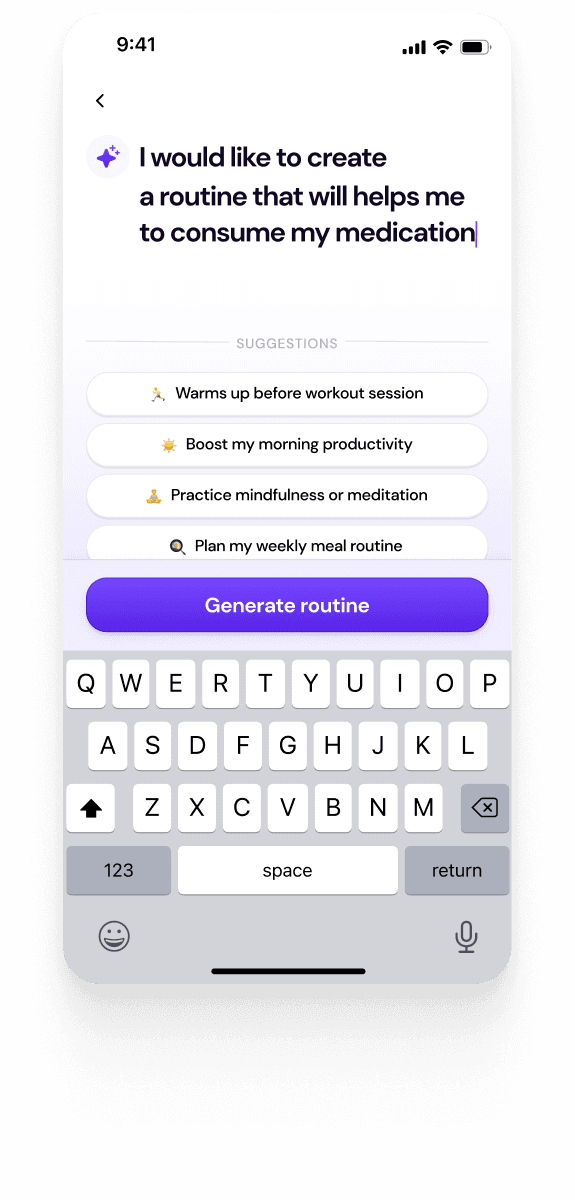
Vibe Studio's AI agent functions as a senior mobile engineer: it generates complete Flutter applications from natural-language descriptions, manages state architecture, ensures cross-platform UI consistency, integrates Firebase and OpenAI services, and previews the results across multiple device form factors simultaneously. A Developer Mode provides a built-in code editor with real-time AI suggestions for teams that need granular control beyond the conversational interface.
Core capabilities include flexible state management selection, visual asset generation via chat, instant multi-device code preview, GitHub integration for full version control and local development, full source code ownership and export at any time, secure environment variable management, an AI-powered debugger, one-click APK generation, and direct deployment pipelines to the Apple App Store, Google Play, and the web. Pricing runs from a free tier through $20/month (Pro) and $50/month (Ultra).
2. Lovable
Lovable (lovable.dev) is an AI-powered web application builder that converts natural language prompts into React and Tailwind CSS frontends, backed by Supabase for authentication and database functionality. Users describe their desired application, and Lovable's AI generates the frontend code, handles routing, and configures the backend integration, producing a deployable web application within minutes.
The platform supports a range of workflow modes. Standard Chat mode handles iterative feature requests; Agent Mode enables autonomous multi-step build tasks where Lovable plans and executes a sequence of changes without manual prompting for each step. GitHub integration allows code export and version control. The platform targets startup founders, product managers, solo developers, small agencies, and non-technical builders who want to prototype and ship web products rapidly.
Lovable was founded in 2024 and reached $13.5 million ARR within its first three months. Its $200 million Series A, led by Accel in July 2025 at a $1.8 billion valuation, is one of the largest early-stage rounds in developer tools history.
The Mobile Divide: The Most Important Difference
Every comparison between Vibe Studio and Lovable begins and ends with one question: Does your product need to be a mobile app?
If the answer is yes, if users need to download your product from the App Store or Google Play, if the product needs to send push notifications, access the device camera or GPS, function offline, or simply live as an icon on a user's home screen, then Lovable is not an option.
Categorically. No configuration, no workaround, no integration can make Lovable produce a native iOS or Android application. It generates React web applications, and that is the entirety of its output.
Vibe Studio is specifically designed for this outcome. Its Flutter foundation means that every application it generates is a natively compiled, cross-platform mobile application, the same kind of app that dominates the App Store and Google Play today. The web version is included, but it is a feature of a mobile-first architecture, not the primary output.
Pricing: Predictability vs. Credit Creep
Beyond the mobile capability gap, pricing philosophy is the second major differentiator between these platforms. Vibe Studio uses a flat monthly subscription model: $20 per month for Pro (which includes $20 in iteration credits and access to Claude Sonnet-tier models) and $50 per month for Ultra (which provides a larger credit allocation, the fastest models available, a full GitHub integration with repo export, and the production deployment pipeline). Paid overages are available if a team exceeds its monthly allocation, but the base cost is known and fixed.
Lovable uses a credit-based model. Credits are consumed each time the AI generates or modifies code, and the number of credits consumed per request varies based on complexity. This model has generated significant user frustration: multiple community reports and forum threads document situations where credits were consumed by AI-generated errors, responses where the model misunderstood the request, broke something that was working, or spent credits iterating on a problem it introduced. In these cases, users paid for the AI's mistakes in addition to its successes.
For teams managing product budgets, the difference between a $20 flat monthly fee and a variable credit model is not cosmetic; it is a planning and forecasting concern. Vibe Studio's model is transparent by design.
Security and Enterprise Readiness
1. Vibe Studio's Security Posture
Vibe Studio is built for enterprise-grade deployments. Its security architecture is built on four principles: zero data retention (user data is never stored), isolated and encrypted environments (each project runs in an isolated container with end-to-end encryption), data residency controls (enterprise clients can specify where their data is processed), and always-on encryption. The platform targets compliance with SOC 2 Type II, GDPR, HIPAA, and ISO 27001, a combination that satisfies the security requirements of healthcare, financial services, and regulated enterprise environments.
2. Lovable's Security Concerns
In April 2025, cybersecurity firm Guardio Labs published research describing a vulnerability in Lovable that they named VibeScamming. Their research demonstrated that Lovable could be manipulated through crafted prompts into generating functional phishing pages, complete with fake login forms, credential harvesting backends, and hosting infrastructure. The research noted that Lovable was more susceptible to this manipulation than other AI builders tested, due to its permissive content generation policies at the time.
While Lovable has likely addressed specific prompt vectors since the research was published, the incident highlights a meaningful gap in enterprise security maturity between the two platforms. For organizations where security review is a procurement requirement, such as healthcare, finance, government, and regulated enterprises, this history is a substantive concern.
Developer Experience and Code Quality
Both platforms provide full code ownership and the ability to export or modify the underlying source code. This is an important baseline: teams should never choose an AI builder that locks them into a proprietary environment with no exit path.
The key difference in developer experience is the type of code produced. Vibe Studio generates Flutter/Dart code, a typed, compiled language with strong tooling support, designed to be maintainable by a professional engineering team if the project grows beyond the AI builder workflow. The code is structured according to Flutter's established architecture patterns, including support for multiple state management approaches.
Lovable produces React code. For teams already operating in React, this is a natural fit. For teams without React expertise, it adds a framework learning curve if they want to extend or maintain the generated code beyond what the AI can handle.
Why Teams Choose Vibe Studio
Vibe Studio is the right choice for any team that needs to build a real product, one that reaches users on the devices they actually use, distributed through the channels they actually trust.
Mobile-First Delivery: Vibe Studio is the only AI builder that can take a product from a natural language description all the way to a published listing on the Apple App Store and Google Play Store. For any product that needs to live on a user's home screen, this is non-negotiable.
Single Codebase, Every Platform: Flutter's compile-once architecture means a team maintains one codebase and ships to iOS, Android, and web simultaneously. No separate React Native project. No separate web build. One product, everywhere.
Enterprise-Grade Security: With SOC 2 Type II, HIPAA, GDPR, and ISO 27001 certifications, Vibe Studio meets the procurement requirements of healthcare, finance, government, and regulated enterprise environments- certifications that web-only builders do not offer.
Predictable, Flat-Rate Pricing: At $20/month (Pro) and $50/month (Ultra), Vibe Studio's pricing is fixed. Teams know exactly what they will spend. There are no credit surprises, no per-iteration charges for AI errors, and no unpredictable billing at the end of the month.
Accessible to the Whole Team: Vibe Studio's conversational interface works for founders, designers, and product managers, not just engineers. The entire team can participate in the product creation process, reducing bottlenecks and accelerating delivery.
Production-Ready Output: Every application Vibe Studio generates is structured for production deployment. The Flutter/Dart codebase follows established architectural patterns, is fully exportable, and is maintainable by any professional Flutter engineer.
The Mobile App Market Opportunity
The global app economy generated over $150 billion in 2024, driven primarily by native mobile applications on iOS and Android. Users spend over 90% of their smartphone time inside native apps, not mobile browsers. For product teams building consumer software, field tools, healthcare applications, or enterprise mobile products, native delivery is not optional. It is the baseline expectation.
Vibe Studio was built to meet that expectation. Where other AI builders stop at the browser, Vibe Studio extends all the way to the App Store, giving any team the ability to compete in the full mobile app economy, not just its web-adjacent edge.
Conclusion
Lovable has earned its place as the leading AI web app builder of 2025. Its speed, its Supabase integration, its agent-mode autonomy, and its community momentum are genuine strengths that make it an excellent choice for teams building web products in the React ecosystem.
But the category of builders who need to ship native mobile applications to iOS and Android users, through the App Store and Google Play, cannot be served by Lovable. For that category, Vibe Studio is the purpose-built answer: a Flutter-native AI builder with production deployment pipelines to both mobile platforms and the web, enterprise-grade security certifications, a predictable pricing model, and the ability to serve any builder regardless of technical background.
The question is not which platform is better in the abstract. The question is what you need to build. If the answer includes a mobile app, Vibe Studio is the right platform.
Authors

Build Beyond the Browser with AI
Build production-ready mobile and web apps with AI, from one codebase to the App Store and Google Play.
References
One year of Lovable: Welcome to the age of the builder | Lovable. (2026, February 5). Lovable. https://lovable.dev/blog/one-year-of-lovable
Lovable. (n.d.). Lovable - Vibe Code Apps & Websites with AI, Fast | AI App Builder. https://lovable.dev/
Lovable pricing. (n.d.). Lovable. https://lovable.dev/pricing
Team, G. R. (2026, March 11). "VibeScamming" — From Prompt to Phish: Benchmarking Popular AI Agents’ Resistance to the Dark Side. Guardio. https://guard.io/labs/vibescamming-from-prompt-to-phish-benchmarking-popular-ai-agents-resistance-to-the-dark-side
The Hacker News. (n.d.). Lovable AI is found most vulnerable to VibeScamming — enabling anyone to build live scam pages. https://thehackernews.com/2025/04/lovable-ai-found-most-vulnerable-to.html