Vibe Studio vs. Bolt.new

Summary
Vibe Studio and Bolt.new both use AI to turn natural-language ideas into applications, but they target different outcomes. While Bolt.new focuses on web development, Vibe Studio is built around native iOS and Android delivery alongside the web. The comparison explores their mobile capabilities, pricing models, production reliability, security, and code ownership to show why Vibe Studio is better suited for teams building production-ready products
Key insights:
Native iOS and Android deployment
Predictable flat-rate pricing
Production-focused architecture
Enterprise-grade security
Full code ownership
Introduction
The promise of AI-powered app development is simple: describe what you want to build, and the tool builds it. In 2024 and 2025, that promise became reality, with a new generation of platforms collapsing the distance between product idea and deployed application. But not all of these platforms define "shipped" the same way.
This insight compares Vibe Studio and Bolt.new, two tools that both generate working applications from natural language, but with fundamentally different delivery destinations. Bolt.new ships to a web URL. Vibe Studio ships to iOS, Android, and the web. For teams whose product needs to reach users on their phones, that difference is everything.
Understanding the Platforms
1. What Is Vibe Studio?
Vibe Studio is Walturn's AI-powered Mobile Engineering IDE, built on Flutter. Flutter is Google's open-source UI toolkit for building natively compiled applications for mobile, web, and desktop from a single codebase. Unlike web-to-mobile conversion approaches, Flutter compiles directly to native ARM code for iOS and Android, producing applications with native performance, native UI rendering, and access to native device APIs.
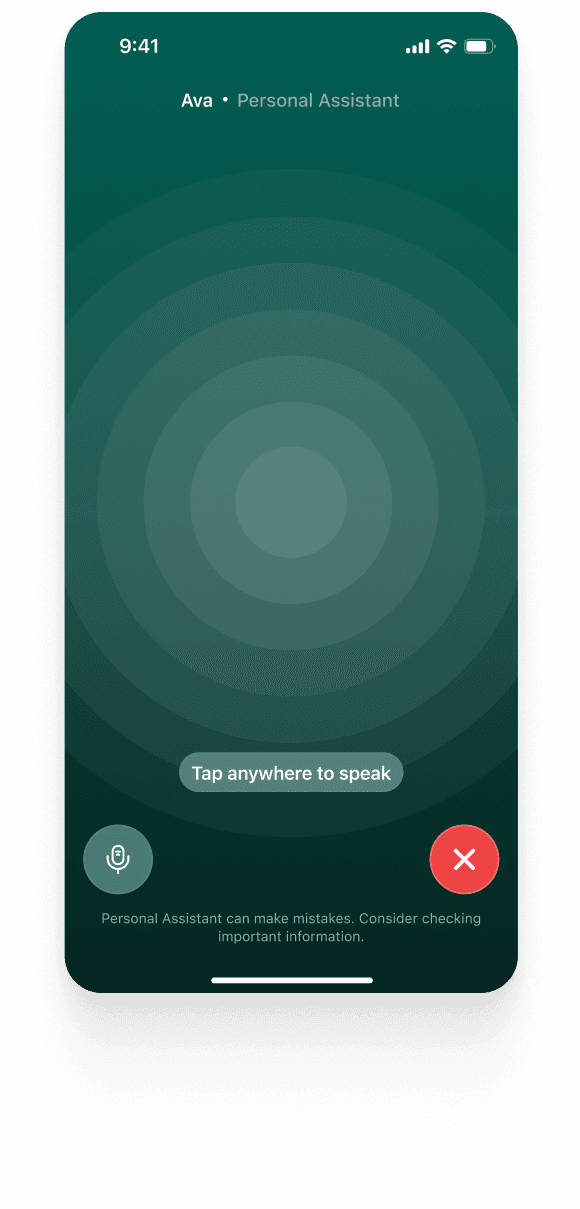
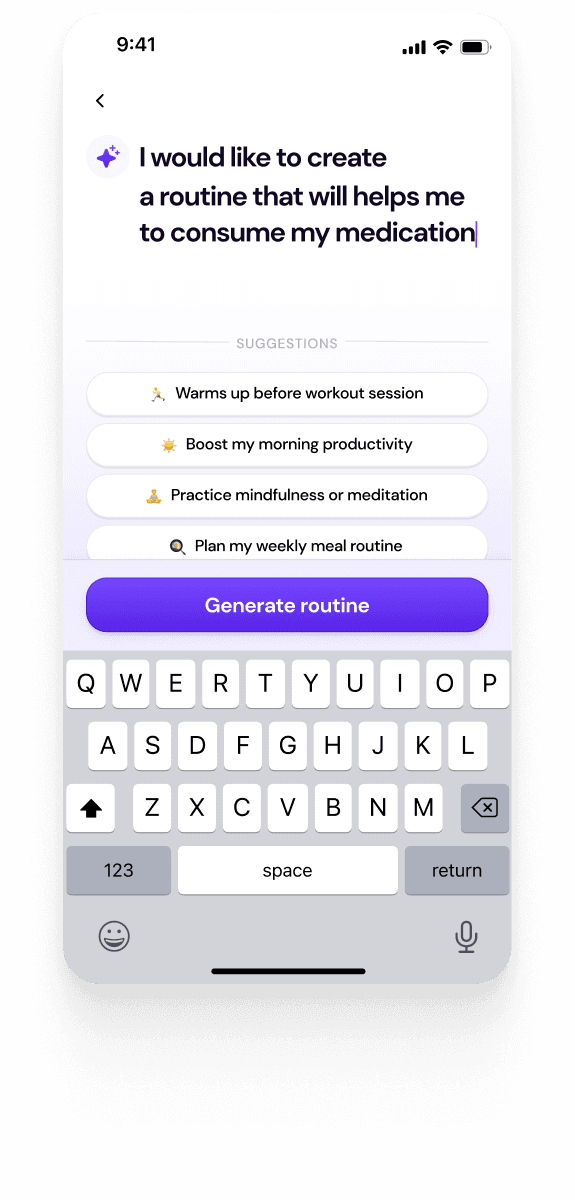
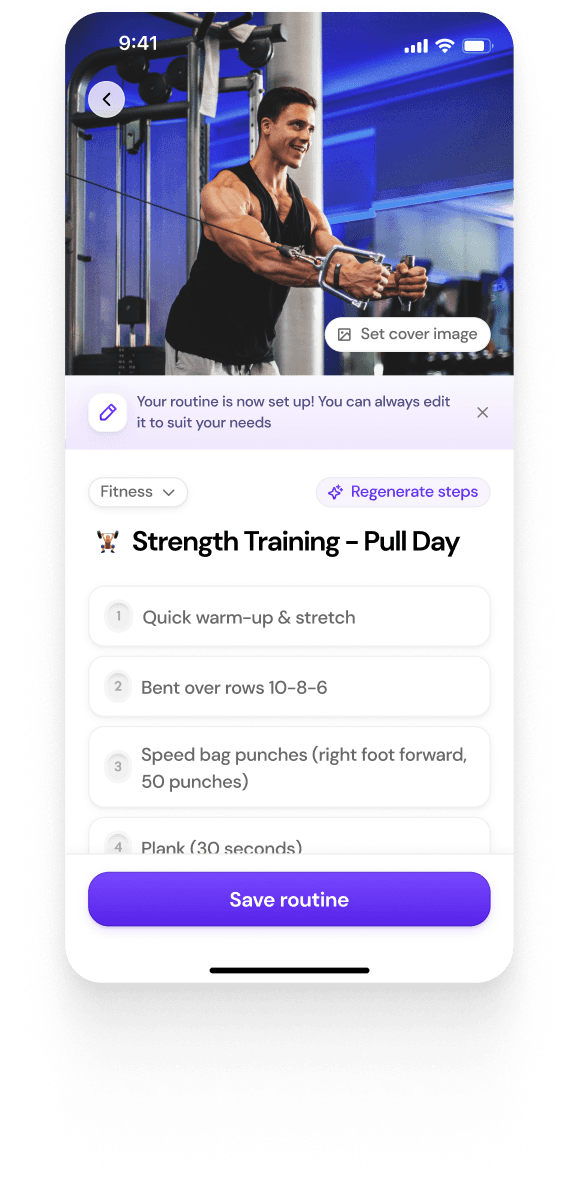
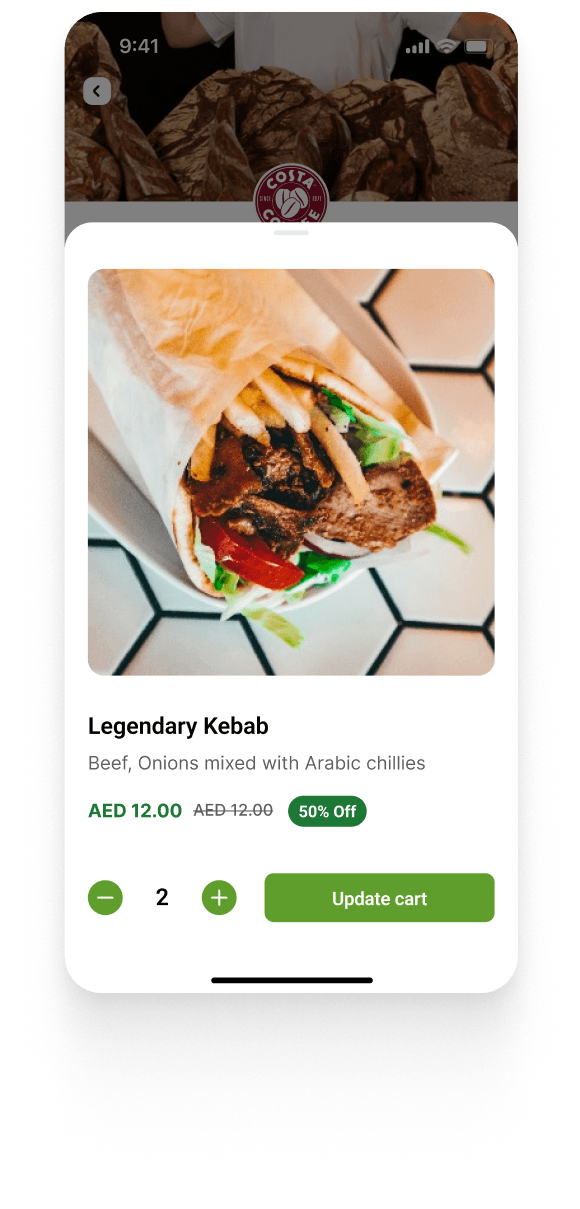
Vibe Studio's AI agent generates complete Flutter applications from natural language descriptions. The agent handles state management architecture, navigation, UI component generation, visual asset creation, backend integration with Firebase and OpenAI, and multi-device layout consistency. Real-time preview allows the team to see the application simultaneously across phone, tablet, and desktop form factors as changes are made.
Developer Mode unlocks a built-in code editor with AI-powered suggestions for teams that need to fine-tune beyond the conversational interface. GitHub integration enables full version control, branching, and local development using existing workflows. APK generation produces installable Android builds, and deployment pipelines for the App Store and Google Play are built into the platform at the Ultra tier.
2. What is Bolt.new?
Bolt.new is a browser-based AI development environment built by StackBlitz on their WebContainers technology. WebContainers is StackBlitz's proprietary runtime that executes a complete Node.js environment inside a browser tab using WebAssembly, no server, no local installation, no Docker container required. This technical foundation enables Bolt.new to offer an entirely zero-setup development experience.
Users describe what they want to build, and Bolt.new generates a full-stack application using their choice of framework (React, Vue, Vite, Angular, Remix, Astro, and others). The generated application runs live in the browser preview alongside the code editor, with all file changes visible in real time. Integration with Netlify and Bolt Cloud enables one-click web deployment. Supabase and Firebase integrations handle backend services. A Figma import feature allows design-to-code workflows. An Expo integration for mobile development exists but is documented as experimental.
Bolt.new uses token-based pricing: the AI consumes tokens to generate and modify code, and users purchase token bundles or subscribe to plans that include a monthly token allocation.
The Mobile Capability Gap
Bolt.new's Expo integration is frequently cited as evidence that it can be used for mobile development. This requires careful examination. Expo is a React Native framework that generates JavaScript-based cross-platform mobile applications, not natively compiled ones. More importantly, Bolt.New's Expo integration is explicitly documented as experimental.
Experimental means: no production support, no App Store submission workflow, no guaranteed compatibility between Bolt.new's generated code and Expo's build system, and no guarantee the integration will remain available. For a team building a product that needs to ship to the App Store on a defined timeline, 'experimental' is not an acceptable dependency.
Vibe Studio's mobile capability is not experimental. It is the product's reason for existing. Every component of the platform, the AI agent, the state management tooling, the preview system, the APK generator, and the deployment pipeline, is built around the assumption that the output will be a native mobile application. App Store and Google Play submissions are not add-ons; they are the delivery destination.
The Pricing Problem: Tokens vs. Subscription
Bolt.new's token model has become one of the most discussed topics in the Vibe coding community. On simple projects, a landing page, a basic CRUD app, and a portfolio site, the token consumption is manageable, and the cost is reasonable. But on complex projects, or when the AI makes errors and requires multiple correction cycles, the token cost can escalate dramatically.
Multiple documented cases in developer forums and social media describe users exhausting hundreds of dollars in credits during a single debugging session, where the AI agent introduced a problem, consumed tokens attempting to fix it, introduced a new problem, consumed more tokens, and so on in a cycle that could not easily be interrupted without losing progress. One widely shared thread documented a total cost exceeding $1,000 for a session attempting to build a moderately complex web application.
This is not an edge case failure; it is a structural characteristic of token-based billing in AI coding environments. The AI has no incentive to be efficient with tokens; it only needs to solve the problem. The user bears the cost of every iteration, whether successful or not.
Vibe Studio's flat-rate model eliminates this risk. At $20/month for Pro, a team knows exactly what they will spend, regardless of how many iterations the AI requires to produce a satisfactory result. The platform's paid overage system provides a safety valve for unusually intensive months, but the base cost is fixed and foreseeable. For product teams operating on budgets, which is to say, all product teams, this is not a minor convenience.
Production Reliability
Beyond pricing, Bolt.news' production reliability at scale has been questioned by its user community. Reports of blank screens after deployment, missing assets in production builds, and incomplete feature implementations are common in community forums. The general pattern described is that Bolt.new performs excellently for simple to moderate web projects, but degrades in quality as application complexity increases, with the AI losing coherence across the codebase beyond approximately 15 to 20 components.
This degradation pattern is a known challenge across AI builders that use large language models for code generation: as the context window fills with the entire history of a project, the model's ability to maintain consistency across all parts of the codebase diminishes. Teams building production applications need a tool that handles this gracefully.
Vibe Studio's architecture addresses this by maintaining a structured project state rather than relying on conversation history alone. The Flutter codebase it generates follows established architectural patterns, including separation of concerns between UI, business logic, and data layers, which makes the code more maintainable by the AI and by any engineers who take over the project.
Why Teams Choose Vibe Studio
Vibe Studio is built for teams that need to ship real products, not just web prototypes. For product teams with serious delivery ambitions, the advantages are clear and decisive.
Production Mobile Delivery: Vibe Studio is the only AI builder with a complete production pipeline to the Apple App Store and Google Play. Any product that needs to exist as a native mobile app, with native performance, device feature access, and app store distribution, starts and ends with Vibe Studio.
Predictable Flat-Rate Pricing: At $20/month (Pro) and $50/month (Ultra), Vibe Studio's costs are fixed and known in advance. Teams never face a surprise bill at month's end, no tokens depleted by AI errors, no escalating session costs on complex builds.
Production-Grade Reliability: Vibe Studio's Flutter architecture uses structured project state and established patterns to maintain code quality at scale. There is no degradation at 15 or 20 components; the platform is built for production from the first line of code.
Enterprise Security: With SOC 2 Type II, HIPAA, GDPR, and ISO 27001 certifications, Vibe Studio meets the compliance requirements of healthcare, finance, and regulated enterprise environments, a bar that Bolt.new does not currently clear.
Full Code Ownership: Every Flutter application Vibe Studio generates is fully exportable at any time. Teams own their codebase outright, with no platform lock-in and no dependency on Vibe Studio's infrastructure to run their product.
Conclusion
Native mobile delivery, predictable pricing, and production-grade reliability are the three axes on which Vibe Studio outperforms Bolt.new decisively. For teams building web prototypes quickly, Bolt.new's browser-based generator may serve an early exploration need, but for teams building products that need to reach users on their phones through the App Store and Google Play, Vibe Studio is the platform designed for exactly that outcome.
The mobile app economy is too large and too important for product teams to rely on experimental mobile support and unpredictable billing. Vibe Studio delivers the certainty, in capability, in cost, and in production quality that serious product development demands.
Authors

Vibe Studio vs. Bolt.new: Build Beyond the Browser
Go from idea to production-ready mobile and web apps with native deployment, predictable pricing, and reliable AI-powered development.
References
Vibe Studio - Build beautiful web and mobile apps. (n.d.). https://vibe-studio.ai/
Bolt.new. (n.d.). Bolt AI builder: Websites, apps & prototypes. bolt.new. https://bolt.new/
Stackblitz. (n.d.). GitHub - stackblitz/bolt.new: Prompt, run, edit, and deploy full-stack web applications. -- bolt.new -- Help Center: https://support.bolt.new/ -- Community Support: https://discord.com/invite/stackblitz. GitHub. https://github.com/stackblitz/bolt.new
Customer story | StackBlitz | Claude. (n.d.). Claude. https://claude.com/customers/stackblitz
Melnikova, V., & Turner, T. (2024, December 2). bolt.new from StackBlitz: how they surfed the AI wave—with no wipeouts—Martian Chronicles, Evil Martians’ team blog. evilmartians.com. https://evilmartians.com/chronicles/bolt-new-from-stackblitz-how-they-surfed-the-ai-wave-with-no-wipeouts